REEID EDITORIAL
Why multilingual WordPress becomes an engineering problem
Multilingual WordPress stops being a content task when each language version has to preserve the same page structure, metadata, dynamic output, plugin behavior, URLs, and SEO signals. At that point, the site is no longer just translating text; it is maintaining a coordinated system where content, templates, routing, and indexing rules all have to stay aligned.
Key takeaway
The engineering challenge in multilingual WordPress is consistency: every language variant must remain structurally equivalent enough for WordPress, plugins, and search engines to interpret it correctly, while still allowing language-specific content where needed.
The core problem is structural, not linguistic
A multilingual WordPress site has to do more than replace visible text. The translated version must still fit the same page model: blocks, templates, custom fields, navigation, and any plugin-owned output that the page depends on.
If the translated page changes structure, the site can drift into inconsistent layouts, broken relationships between content pieces, or pages that no longer behave the same way across languages. That is why multilingual work becomes an engineering problem: the system has to preserve meaning and behavior, not just wording.
Page structure has to survive translation
WordPress content is rarely just a single body field. A page may combine block content, template parts, reusable patterns, custom fields, and dynamic sections. Translation has to respect that structure so the page still renders as the same kind of page in every language.
This creates a modeling decision: which parts are language-specific text, and which parts are structural or shared data. If that boundary is unclear, translators or editors can accidentally alter layout-critical content, duplicate structural elements, or leave a language variant missing required pieces.
Metadata and custom fields are part of the contract
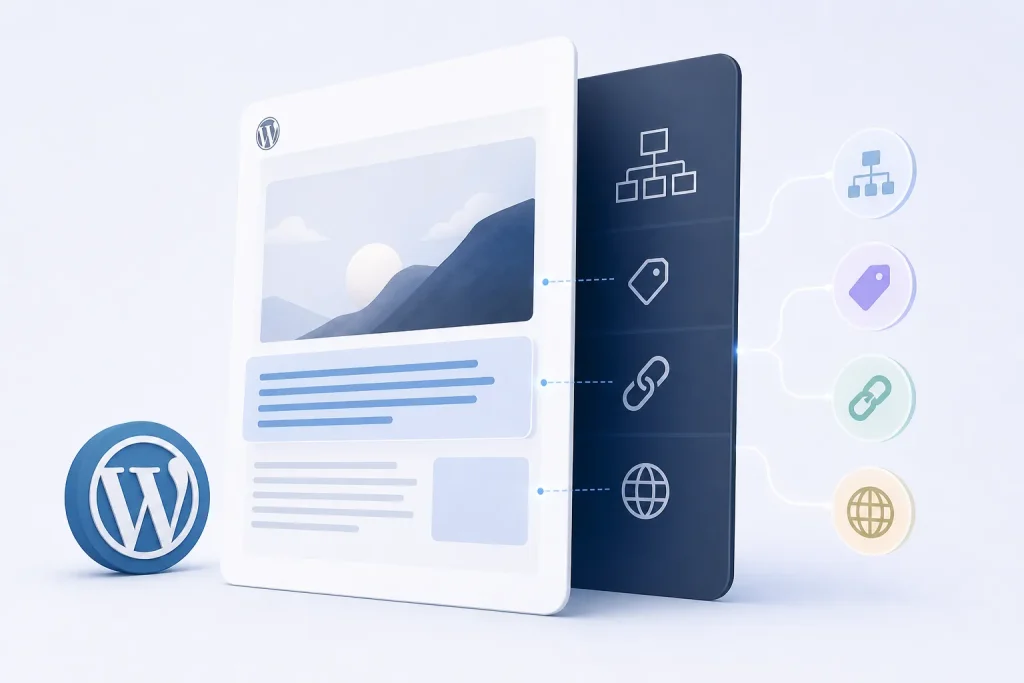
In multilingual WordPress, metadata is not optional decoration. Titles, descriptions, custom fields, and other stored values often drive how a page renders, how it is linked, and how it is interpreted by plugins or search engines.
If metadata is translated inconsistently, the visible page may look correct while the underlying data becomes mismatched. That can produce pages whose content, labels, and structured fields no longer describe the same thing, which is a reliability issue rather than a cosmetic one.
Dynamic content introduces dependency management
Dynamic sections make multilingual sites harder because the page output is assembled at runtime from data sources outside the translated text itself. A translated page may depend on related posts, language-specific taxonomy terms, or plugin-generated components that must resolve correctly for each locale.
The engineering question is whether those dependencies are duplicated, mapped, or shared. If a translated page points to the wrong related content, or if a dynamic component has no language-aware counterpart, the page can render partially or inconsistently even when the translation itself is complete.
Plugin compatibility is really output compatibility
Many WordPress plugins do not just store data; they generate output, add fields, or alter page behavior. In a multilingual setup, the issue is whether that plugin-owned data can be translated, mapped, or preserved without breaking the plugin’s assumptions.
A plugin may work well on a single-language site but fail in multilingual use if it expects one canonical record, one URL, or one set of metadata. The failure mode is often subtle: the plugin still runs, but its output no longer matches the language version being viewed.
URLs and routing define the language boundary
Multilingual WordPress also becomes a routing problem because each language version needs a stable URL pattern and a predictable way to resolve requests. The site must decide how language is represented in the path, how language variants map to content, and how requests are routed to the correct version.
If routing is inconsistent, users can land on the wrong language, internal links can point to the wrong variant, and content relationships can become ambiguous. URL design therefore affects both usability and the integrity of the content model.
SEO signals must stay coherent across variants
Search engines need to understand which pages are equivalents, which page is canonical for a given language, and how language-specific versions relate to one another. That means multilingual WordPress has to preserve SEO signals as part of the page architecture, not as an afterthought.
When metadata, URLs, and content relationships diverge, the site can send mixed signals about duplication, language targeting, and canonical intent. The result is not just weaker SEO performance in the abstract; it is a system that no longer communicates clearly which page should represent which language version.
Operational reliability depends on clear content ownership
A multilingual site needs explicit rules for what is translated, what is shared, and what is derived. Without that separation, editors may change structural content in one language and unintentionally affect another, or update a plugin field without realizing it is used by multiple language variants.
The operational goal is consistency under change. A reliable multilingual architecture lets teams update content, templates, and plugin data without creating hidden mismatches between language versions. That usually requires disciplined content modeling, predictable relationships between records, and a clear understanding of which parts of the page are authoritative.
Frequently asked questions
Why can’t multilingual WordPress be handled as a simple translation workflow?
Because the translated page has to preserve more than text. It also has to preserve structure, metadata, dynamic output, plugin behavior, URLs, and SEO relationships. Once those elements matter, the problem becomes one of system consistency rather than language conversion.
What usually breaks first in a multilingual WordPress setup?
The first failures are often structural or relational: a translated page loses a required field, a dynamic component points to the wrong related content, or a plugin-generated element no longer matches the language version being viewed.
Why are URLs such a big part of multilingual architecture?
Because URLs define how language variants are addressed and routed. If the URL scheme is inconsistent, users can reach the wrong language version and search engines can receive unclear signals about which pages correspond to each other.
What is the main engineering decision in multilingual WordPress?
Deciding which data is language-specific, which data is shared, and which data is derived from other records. That boundary determines whether the site can stay consistent as content, templates, and plugins evolve.
SOURCES & EVIDENCE
PUT THE ARCHITECTURE TO WORK
See how WordPress integrations behave in a multilingual system
Explore plugin-specific compatibility, translation surfaces and implementation notes in the REEID Integration Directory.

Elementor Website Builder
REEID has verified Elementor Website Builder compatibility with 3 visitor-facing translation surfaces currently published for this integration.

WooCommerce
REEID has verified WooCommerce compatibility with 3 visitor-facing translation surfaces currently published for this integration.
Yoast SEO
REEID has tested and verified Yoast SEO compatibility with REEID Translate. No specific visitor-facing translation field is currently published for this integration.