REEID EDITORIAL
Multilingual WordPress SEO: how canonical, hreflang, and URL architecture fit together
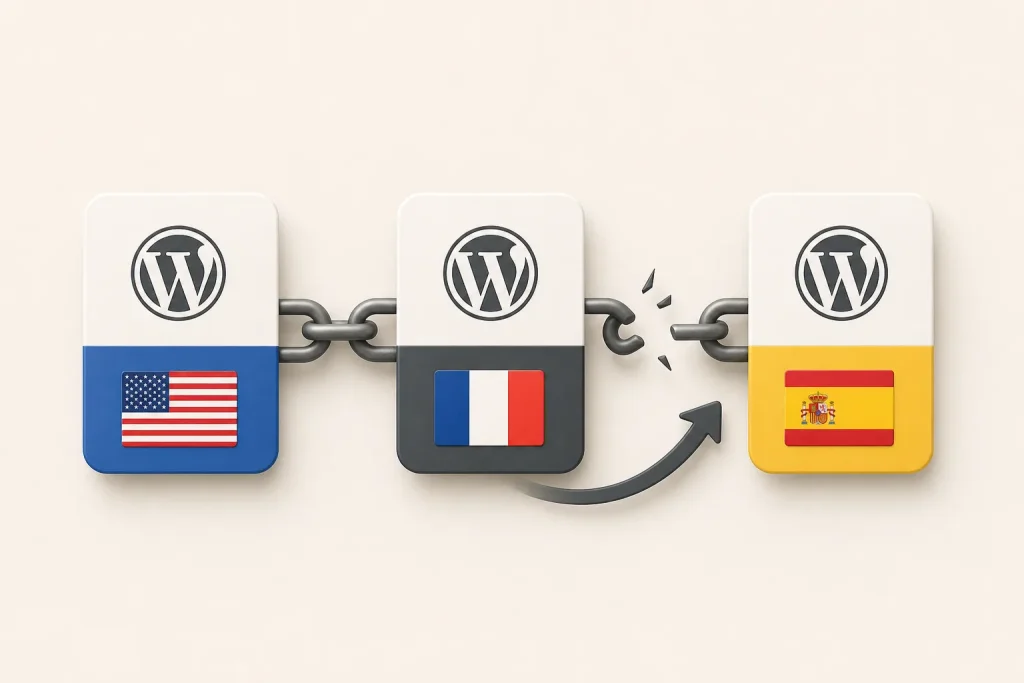
On a multilingual WordPress site, canonical URLs, hreflang relationships, and URL structure are not separate SEO settings. They are one indexing system. If they disagree, search engines can misread language variants as duplicates, collapse the wrong pages into a single canonical, or waste crawl budget on URLs that should have been clearly related from the start.
Key takeaway
Treat multilingual SEO as an architecture decision: each language version needs a stable URL pattern, a self-referential canonical, and a complete hreflang relationship set that points to the correct equivalents across languages.
Why multilingual SEO fails when signals disagree
A multilingual WordPress site can have several URLs that represent the same underlying content in different languages. That is normal. The problem starts when the site sends mixed signals about which URL is the primary version, which pages are equivalents, and which URLs should be indexed separately.
Canonical tags, hreflang annotations, and URL structure each answer a different question. Canonical says which URL should be treated as the preferred representative for indexing. Hreflang says which URLs are language or regional equivalents. URL architecture gives search engines the first structural clue about how the site is organized. If those three layers do not align, search engines may ignore one signal, merge pages incorrectly, or fail to connect language variants at all.
Canonical URLs should stay within the same language version
On a multilingual site, the canonical URL for a page should normally point to that page’s own language version, not to a different language equivalent. If an English page canonicals to a French page, the site is telling search engines that the French URL is the preferred representative of the English content. That creates accidental cross-language canonicalization, which can suppress the English page from indexing even though it is not a duplicate in the practical sense that matters to users.
This is especially risky when templates, translation workflows, or plugin-owned metadata reuse the same content model across languages. A shared post ID or shared custom field structure does not mean the language variants should collapse into one canonical URL. Each language page needs its own indexable identity, even if the content relationship is obvious to humans.
The engineering rule is simple: canonical should resolve ambiguity inside a language version, not erase the distinction between languages.
Hreflang is a relationship map, not a replacement for canonical
Hreflang does not choose a winner. It declares equivalence. It tells search engines that one URL is the English version, another is the French version, and so on. That means hreflang only works when every language page can be reached as a distinct URL and each page can point back to the others in a consistent relationship set.
If hreflang is incomplete, search engines may still index the pages, but they lose the language mapping that helps them serve the right version to the right audience. If hreflang points to URLs that are not actually indexable, or if the canonical points somewhere else, the relationship becomes unstable. The result is often broken language targeting rather than a clean multilingual cluster.
In practice, hreflang depends on canonical discipline. The canonical tells search engines which URL is the representative of itself; hreflang tells them which other URLs belong in the same language family.
URL architecture is the foundation that makes the signals believable
The URL pattern is not just a routing choice. It is part of the indexing model. A multilingual WordPress site needs a URL architecture that makes language separation obvious and durable, whether that means language-specific paths, subdomains, or separate domains. The exact pattern matters less than consistency: each language version should have a predictable place in the site structure, and that structure should not create accidental duplicates.
If language variants share too much of the same path logic without a clear language marker, search engines may need to infer relationships from content alone. That increases ambiguity and crawl waste. If the architecture changes frequently, old URLs can continue to exist, redirect, or linger in internal links, which makes canonical and hreflang maintenance harder.
A stable URL architecture also helps WordPress routing stay deterministic. When the language is encoded in the URL, templates, internal links, and canonical generation can all derive the same language context instead of guessing from content or browser state.
How the three layers should line up
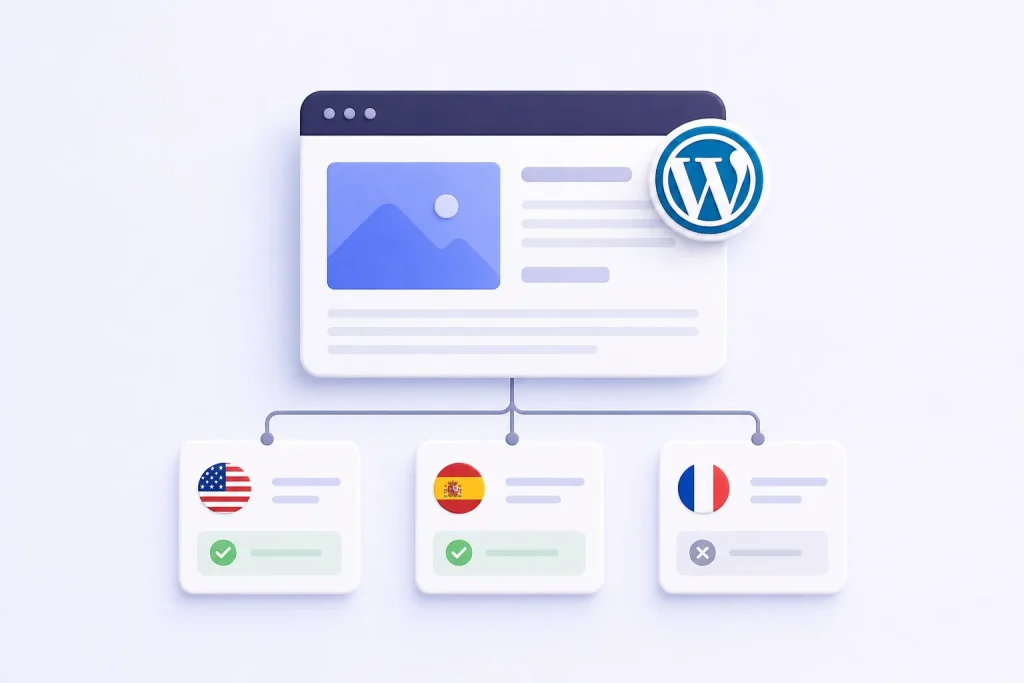
The cleanest multilingual setup is one where each language page has a unique URL, a self-referential canonical, and hreflang links to its equivalents. Those three signals should describe the same reality from different angles.
If the URL says “this is the German page,” the canonical should confirm that this German URL is the preferred version of the German page, and hreflang should connect it to the English, French, or other equivalents. When all three agree, search engines have little reason to reinterpret the page as a duplicate or to collapse it into another language version.
When they disagree, the failure modes are predictable: a canonical can override the intended language page, hreflang can point to a URL that is not treated as canonical, and the URL structure can make the relationship look accidental rather than intentional.
| Situation | What it signals | Likely consequence |
|---|---|---|
| English page canonicals to French page | French URL is preferred for English content | Accidental cross-language canonicalization; English page may lose indexing visibility |
| Hreflang points to pages that are not self-canonical | Language equivalents are declared, but the representative URL is elsewhere | Broken or unstable language relationships |
| Language variants share unclear URL patterns | Language identity must be inferred from content or templates | Duplicate-content ambiguity and crawl waste |
| Old language URLs remain linked internally after a structure change | Multiple paths appear to represent the same language page | Indexing confusion and unnecessary crawling |
Operational failure modes WordPress owners should watch for
The most common failure is not a missing tag. It is a mismatch between layers. A site can output hreflang correctly and still fail if canonical points to the wrong language. It can use a clean URL structure and still fail if internal links send users and crawlers to outdated variants. It can even have correct canonicals and hreflang on the page itself while XML sitemaps, redirects, or navigation expose a different version of the same relationship.
Another failure mode is partial language coverage. If only some translated pages are linked in hreflang, the site creates an incomplete cluster. Search engines then see a mixture of explicit relationships and orphaned variants, which weakens the language map and can increase crawl waste as crawlers revisit pages trying to resolve the missing connections.
A third failure mode is template drift. In WordPress, multilingual pages often share templates, blocks, or custom fields. If the template logic emits language-specific URLs inconsistently, the site can produce pages that look equivalent but do not agree on canonical or hreflang output.
What to verify in a multilingual WordPress implementation
Start by checking whether every language version has a distinct, stable URL. Then confirm that each page canonicals to itself, not to another language. After that, verify that each page’s hreflang set includes the correct equivalents and that those equivalents also point back consistently.
Also inspect the surrounding WordPress mechanics that can undermine the signals: internal links, menus, language switchers, redirects, and any plugin-owned data that stores relationships between translations. If those layers disagree with the page-level tags, search engines may follow the stronger structural signal instead of the intended metadata.
The goal is not to maximize the number of tags. The goal is to make every layer describe the same language relationship without contradiction.
Frequently asked questions
Should every translated page use a self-referential canonical?
Yes, in the normal multilingual case each language version should canonicalize to itself so that the page remains the preferred representative of that language URL. Canonical should not collapse one language into another unless the site intentionally wants only one language version indexed.
Does hreflang replace canonical tags on multilingual pages?
No. Hreflang and canonical solve different problems. Hreflang declares language equivalents, while canonical identifies the preferred URL for indexing. A multilingual site needs both signals to agree rather than one replacing the other.
Why is URL structure part of multilingual SEO instead of just routing?
Because URL structure is one of the strongest clues search engines use to understand language separation. A clear, stable language-specific URL pattern reduces ambiguity, supports consistent canonical generation, and makes hreflang relationships easier to trust.
What happens if hreflang points to a URL that canonicalizes elsewhere?
That creates a conflict. Search engines may treat the hreflang relationship as unstable or ignore it in favor of the canonical target, which can break language targeting and weaken the intended multilingual cluster.
SOURCES & EVIDENCE
Google: Tell Google about localized versions · Google: Canonicalization · WordPress wp_get_canonical_url()
PUT THE ARCHITECTURE TO WORK
See how WordPress integrations behave in a multilingual system
Explore plugin-specific compatibility, translation surfaces and implementation notes in the REEID Integration Directory.

AIOSEO
REEID has tested and verified AIOSEO compatibility with REEID Translate. No specific visitor-facing translation field is currently published for this integration.
Rank Math
REEID has tested and verified Rank Math compatibility with REEID Translate. No specific visitor-facing translation field is currently published for this integration.

Yoast SEO
REEID has tested and verified Yoast SEO compatibility with REEID Translate. No specific visitor-facing translation field is currently published for this integration.