REEID EDITORIAL
Machine translation is not the same as multilingual content engineering
Machine translation can help produce translated text, but a reliable multilingual WordPress system has to preserve structure, metadata, routing, relationships, and operational consistency across languages. The engineering problem is not just what words appear on the page; it is whether every language version behaves correctly in WordPress, in search, and in connected systems.
Key takeaway
Treat translation as one input to a multilingual content system. The real work is keeping page structure, metadata, dynamic content, URLs, SEO signals, and synchronization aligned so each language version remains valid and maintainable.
Translation changes text; multilingual engineering changes the system
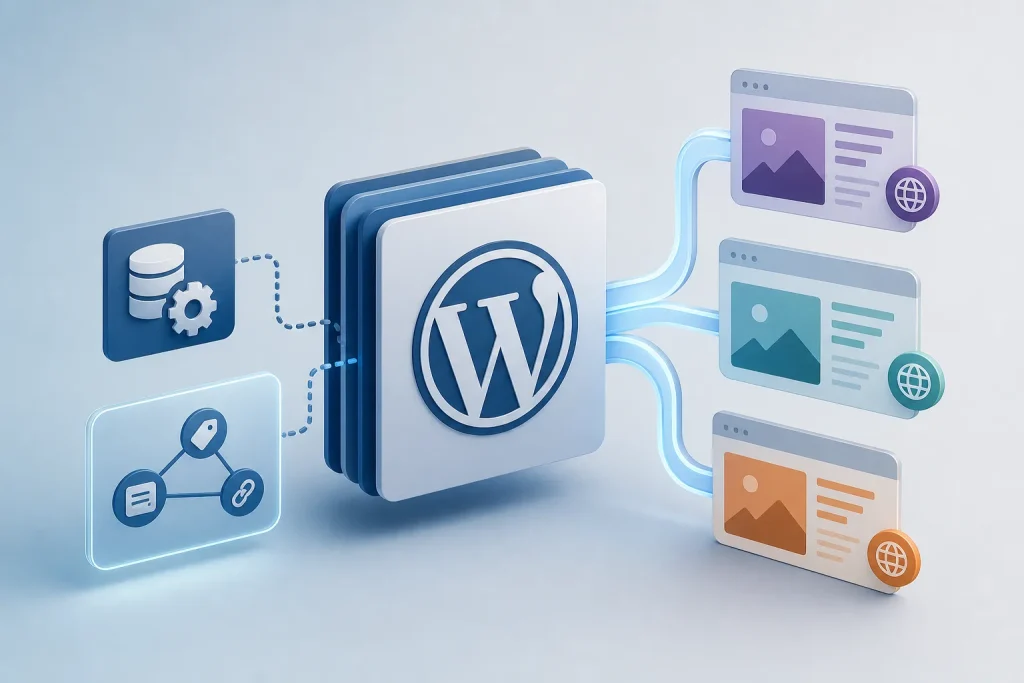
Machine translation can replace one language’s copy with another language’s copy, but that alone does not make a WordPress site multilingual in a dependable way. A multilingual system has to preserve how content is assembled, how it is identified, how it is routed, and how it stays synchronized across language versions.
In WordPress, that means the translated page is not just a text blob. It may be built from blocks, templates, post meta, custom fields, plugin-owned data, and dynamic output. If only the visible strings are translated, the page can still break in structure, lose relationships, or expose inconsistent metadata between languages.
Page structure has to survive translation
A multilingual page needs more than translated sentences inside the content editor. The underlying structure matters because different languages can change text length, reading order, and the way blocks or template parts fit together.
If a translation process only handles text inside a post body, it may miss headings, reusable blocks, template-driven sections, or layout-dependent content. That creates pages that look translated but no longer match the intended structure or editorial hierarchy.
For WordPress implementers, the practical question is whether the translation workflow preserves the original content model. If a page depends on a template, block pattern, or structured fields, each language version must keep the same structural contract even when the wording changes.
Metadata is part of the content, not an afterthought
Multilingual content engineering has to account for metadata such as titles, descriptions, slugs, custom fields, and other language-sensitive values. These fields influence how the page is displayed, indexed, and linked, so leaving them untranslated or unsynchronized can produce mismatched language versions.
A translated body with an untranslated title or slug can confuse users and search engines alike. The page may appear localized in the editor but still surface the wrong language in navigation, search snippets, or internal links.
This is especially relevant when metadata is stored separately from the main content. WordPress sites often distribute information across post meta, custom fields, and plugin-owned data, so the translation workflow must know which fields are language-specific and which should remain shared.
Dynamic content needs language-aware rendering
Not all visible content lives in the post editor. WordPress pages often render dynamic data from relationships, queries, or external systems. If those values are not language-aware, the page can display the wrong related items, the wrong labels, or the wrong localized variant.
This is where machine translation alone reaches its limit. Translating static text does not automatically translate content generated at runtime, nor does it ensure that the correct language version is selected from a related dataset.
A reliable multilingual system has to define how dynamic output behaves per language. That includes deciding whether related content is duplicated, mapped by language relationship, or rendered from shared data with localized labels. The engineering trade-off is between simplicity and consistency: shared data is easier to maintain, but language-specific rendering is often necessary when content relationships differ by market.
URLs, routing, and canonical signals must stay coherent
A multilingual WordPress site is also a routing problem. Each language version needs a stable URL pattern, predictable navigation, and a clear relationship to the other versions of the same content.
If translation is treated as text-only, the site can end up with pages that are localized in content but not in address structure. That creates ambiguity for users and search engines, especially when language versions are meant to be distinct pages rather than interchangeable copies.
Canonical signals and language relationships matter because they tell crawlers which page is the primary version for a given language and how alternate versions relate to one another. If those signals are inconsistent, search engines may index the wrong version, split relevance across duplicates, or fail to understand the multilingual structure.
Synchronization is the operational difference between a translation and a system
A translated page can still drift from its source if updates are not propagated in a controlled way. That drift can affect copy, metadata, links, structured relationships, and dynamic references.
The operational question is not only whether a translation exists, but whether it stays aligned when the source content changes. If the original page is edited after translation, the multilingual system needs a way to detect what changed, what must be retranslated, and what can remain shared.
This is where multilingual content engineering becomes a maintenance discipline. Teams need rules for source-of-truth ownership, update propagation, and review. Without those rules, the site accumulates partial translations, stale metadata, and inconsistent language variants that are hard to audit later.
Integrations can break even when the page looks translated
WordPress sites rarely live in isolation. Forms, commerce data, membership records, search indexes, and other connected systems may all contribute content or behavior to a page. Translating visible text does not guarantee that those integrations behave correctly in every language.
If an integration stores labels, identifiers, or language-specific content outside the main post body, the multilingual workflow has to account for that data too. Otherwise the page may render translated copy while still pointing to the wrong record, the wrong locale, or the wrong external content.
The engineering decision here is whether an integration should be localized, mapped, or shared. Each choice has consequences: localized data increases maintenance, shared data reduces duplication, and mapped data requires reliable relationships between language variants.
Validation has to test behavior, not just language quality
Operational validation for multilingual WordPress should check more than whether the translation reads well. It should verify that the page structure is intact, metadata is present, URLs resolve correctly, canonical and language relationships are coherent, and dynamic content renders in the right language.
A useful validation pass also checks synchronization after edits. If a source page changes, the translated versions should be reviewed for stale blocks, missing fields, broken links, or mismatched relationships.
This is the practical boundary between machine translation and multilingual content engineering: translation produces language output, while validation proves that the output still behaves like a correct WordPress page in every supported language.
SOURCES & EVIDENCE
PUT THE ARCHITECTURE TO WORK
See how WordPress integrations behave in a multilingual system
Explore plugin-specific compatibility, translation surfaces and implementation notes in the REEID Integration Directory.

Elementor Website Builder
REEID has verified Elementor Website Builder compatibility with 3 visitor-facing translation surfaces currently published for this integration.

WooCommerce
REEID has verified WooCommerce compatibility with 3 visitor-facing translation surfaces currently published for this integration.

Yoast SEO
REEID has tested and verified Yoast SEO compatibility with REEID Translate. No specific visitor-facing translation field is currently published for this integration.