
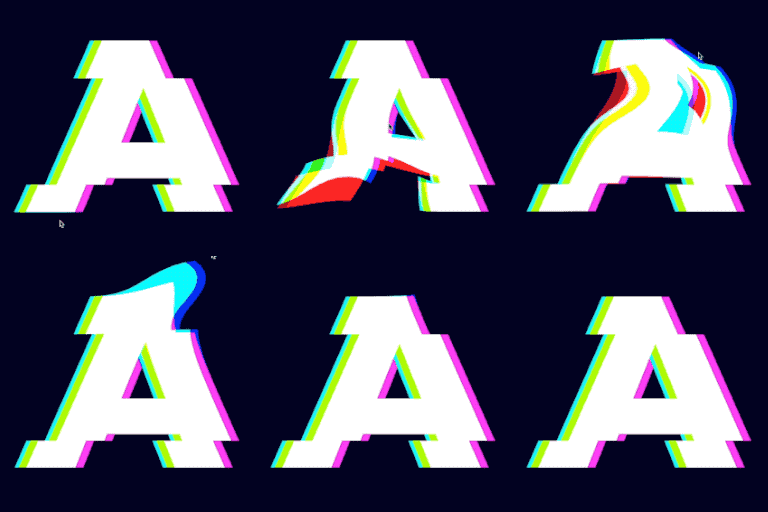
ANIMATEGL ANIMATIONS FOR WORDPRESS
AnimateGL Animations for WordPress – Elementor & Gutenberg Blocks Animations compatibility with REEID Translate
AnimateGL Animations for WordPress – Elementor & Gutenberg Blocks Animations compatibility with REEID Translate is being reviewed using official plugin documentation. Adds entrance animations to elements/blocks via Elementor and Gutenberg block inspector controls (select animation type, direction, distance, delay, duration, easing). No specific text shown to visitors is currently confirmed for translation.
Visit AnimateGL Animations for WordPress – Elementor & Gutenberg Blocks Animations ↗
AWAITING VERIFICATION
What AnimateGL Animations for WordPress – Elementor & Gutenberg Blocks Animations does
Official plugin information supports the compatibility context documented for this category.
MANUAL REVIEW
This integration has not yet been manually verified by REEID.
PLUGIN PROFILE
AnimateGL Animations for WordPress – Elementor & Gutenberg Blocks Animations is documented in the Performance category with 6 documented features.
DOCUMENTATION REVIEW
We use official plugin documentation to describe what the plugin does. Translation support is listed only for text that can be identified and tested.
COMPATIBILITY REVIEW
How AnimateGL Animations for WordPress – Elementor & Gutenberg Blocks Animations compatibility is evaluated
01 · Review official plugin documentation
Confirm documented plugin behaviour before making multilingual compatibility claims.
02 · Identify text shown to visitors
Check whether the documented features display text that visitors can read.
03 · Separate content from functionality
Structure, settings, logic, integrations and runtime behaviour are not treated as translatable content unless they include specific visible text.
04 · Confirm what can be translated
List supported content only after specific text shown to visitors has been identified and can be validated.
PLUGIN INFORMATION
What the plugin does
Plugin capabilities
- Adds entrance animations to elements/blocks via Elementor and Gutenberg block inspector controls (select animation type, direction, distance, delay, duration, easing).
- Supports CSS entrance animations (Fade, Zoom In/Out, Wipe, Slide) that animate opacity/transform/clip-path combinations and are described as GPU-accelerated.
- Supports WebGL entrance animations by converting elements to an image using html2canvas.js and applying effects via custom GLSL shaders (with WebGL effects described as including 3D distortions/gradient fade).
- Provides scroll-triggered entrance behavior: default play when the element enters the viewport (with a configurable viewport entrance threshold described as 70% or 200px), plus an option to repeat on each viewport entry.
- Provides mouse-driven distortion effects (e.g., Pull) with configurable parameters such as strength, size, RGB shift, and ease.
- Supports applying animations via CSS classes to elements outside Elementor/Gutenberg (including preset entrance animations and a “custom entrance animation” created with a live editor).
Distinctive features
Adds entrance animations to elements/blocks via Elementor and Gutenberg block inspector controls (select animation type, direction, distance, delay, duration, easing). Supports CSS entrance animations (Fade, Zoom In/Out, Wipe, Slide) that animate opacity/transform/clip-path combinations and are described as GPU-accelerated. Supports WebGL entrance animations by converting elements to an image using html2canvas.js and applying effects via custom GLSL shaders (with WebGL effects described as including 3D distortions/gradient fade). Provides scroll-triggered entrance behavior: default play when the element enters the viewport (with a configurable viewport entrance threshold described as 70% or 200px), plus an option to repeat on each viewport entry. Provides “lock to scrollbar” behavior where animation progress is tied to scroll position rather than a fixed duration (progress described as 0 when below viewport and completing around the middle of the viewport). Provides mouse-driven distortion effects (e.g., Pull) with configurable parameters such as strength, size, RGB shift, and ease. Supports applying animations via CSS classes to elements outside Elementor/Gutenberg (including preset entrance animations and a “custom entrance animation” created with a live editor).
TRANSLATION BOUNDARY
AnimateGL Animations for WordPress – Elementor & Gutenberg Blocks Animations capabilities and translatable content are documented separately.
Official documentation describes the plugin functionality, but does not currently identify specific text shown to visitors that can be translated.
A feature is not considered translatable unless it includes text that users can read.
LIMITATIONS & QA
Verification notes
- This integration is documented for compatibility context. Visitor-facing translation scope is not listed for this category.
FREQUENTLY ASKED QUESTIONS
AnimateGL Animations for WordPress – Elementor & Gutenberg Blocks Animations and REEID Translate FAQ.
What does AnimateGL Animations for WordPress – Elementor & Gutenberg Blocks Animations do?
AnimateGL Animations for WordPress – Elementor & Gutenberg Blocks Animations has 6 documented features listed in its official documentation. See the Plugin Information section for details.
Does AnimateGL Animations for WordPress – Elementor & Gutenberg Blocks Animations have any content currently confirmed for translation?
No specific content is currently confirmed for translation in this integration.
What needs to be confirmed before translating content from AnimateGL Animations for WordPress – Elementor & Gutenberg Blocks Animations?
Official documentation must identify specific text, such as labels, titles, descriptions or messages, that can be tested in the integration.
RELATED GUIDES
Explore more compatibility guides.
COMPATIBILITY INFORMATION
Evaluate AnimateGL Animations for WordPress – Elementor & Gutenberg Blocks Animations in a multilingual WordPress workflow.
REEID documents AnimateGL Animations for WordPress – Elementor & Gutenberg Blocks Animations functionality separately from confirmed translation support so the distinction is clear.
Supported content will be listed when specific translatable text is identified in the official documentation.