REEID EDITORIAL
Why multilingual WordPress URLs drift out of sync
In multilingual WordPress sites, the visible URL is only one part of the routing system. Translated slugs, redirects, canonical targets, internal links, language maps, and rewrite rules all have to agree on which URL represents each language version. When one layer changes and the others do not, the site can start serving duplicate URLs, sending language switchers to the wrong place, or signaling conflicting canonicals to search engines.
Key takeaway
Multilingual URL drift usually happens when translation, routing, and SEO signals are maintained in separate layers. The fix is not just “clean up slugs,” but to keep permalink translation, redirects, canonicals, internal links, and language relationships synchronized as content changes over time.
What “URL drift” means in a multilingual WordPress site
URL drift happens when the different layers that define a translated page stop pointing to the same destination. A page may still exist in both languages, but the slug, redirect target, canonical URL, internal links, and language switcher may each describe a different preferred address.
In WordPress terms, that means the permalink shown to users, the route WordPress resolves, and the URL search engines are told to index can diverge. Once that happens, the site can expose multiple URLs for the same content or send users into the wrong language version even though the content itself is still present.
How translated slugs and permalinks fall out of alignment
Translated slugs are usually the first place drift appears because they are visible and easy to change. If a slug is updated in one language but the corresponding translated permalink is not updated everywhere else, the site can end up with old links still circulating alongside the new one.
That creates a dependency chain: the content record changes, but any stored references to the old path remain valid only if redirects and internal links are updated too. Without that follow-through, the old URL may still resolve, the new URL may also resolve, and neither layer clearly becomes the single source of truth.
Redirects can preserve access while still creating ambiguity
Redirects are meant to protect users and search engines when a translated URL changes, but they also introduce a second address that must be managed. If the redirect target is not updated when the language structure changes, users can be sent from a current URL to an outdated destination or into the wrong language branch.
A redirect can also mask the underlying problem. The page appears to work because the browser lands somewhere useful, but the site now has two competing signals: the requested URL and the redirected URL. That is how multilingual redirect setups can keep content reachable while still producing duplicate URL patterns and inconsistent indexing signals.
Canonical targets must match the language version actually intended for indexing
Canonical URLs are supposed to tell search engines which version of a page should be treated as the preferred one. In a multilingual site, that preference has to be language-specific, not just page-specific.
If the canonical target points to the wrong language version, or if it still points to an older translated slug after the visible URL has changed, search engines receive conflicting instructions. The page may be accessible in one URL, redirected from another, and canonicalized to a third. That is a classic drift pattern because the routing layer and the SEO layer no longer agree on the authoritative address.
Internal links and language switchers often preserve old assumptions
Internal links are usually generated from stored content, menus, blocks, or templates. If those references were created before a slug change, they can continue pointing to the old translated URL even after the page has moved.
Language switchers have a similar dependency on language maps. They need a reliable relationship between equivalent content items across languages. If that relationship is incomplete or stale, the switcher may jump to the homepage, a fallback page, or the wrong translated post instead of the intended counterpart. In practice, this is why a site can look structurally correct in one language while the cross-language navigation quietly breaks in another.
Language maps are the hidden dependency behind stable cross-language routing
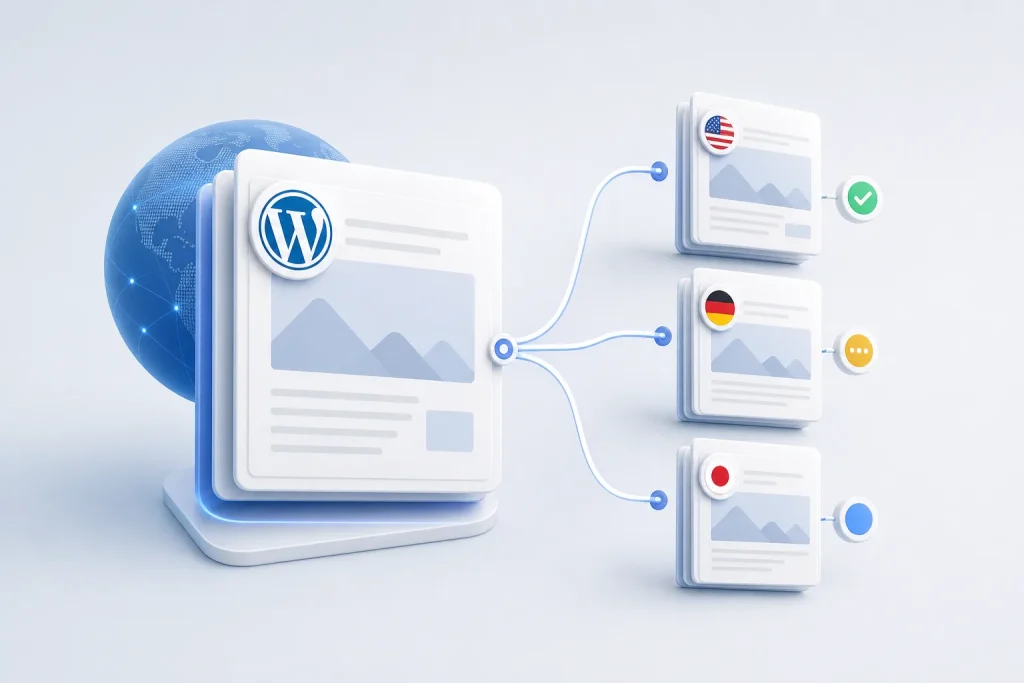
A multilingual site needs a durable mapping between translated content items. That mapping is what lets WordPress or a multilingual layer know that one post in English corresponds to one post in another language.
When that relationship is incomplete, stale, or manually patched in only one direction, routing becomes inconsistent. One language may resolve correctly while the other falls back to a default path. The result is not just a broken switcher; it is a structural mismatch between content relationships and URL resolution.
Routing rules can drift even when content data is correct
Even if translated content, slugs, and relationships are all present, routing rules still have to interpret incoming requests correctly. If rewrite logic or language detection rules are out of sync with the current permalink structure, WordPress may resolve the wrong page or fail to recognize the intended language path.
This is why URL drift is not only a content-management problem. It is also a request-routing problem. The site can store the right data and still serve the wrong URL if the rules that translate a request into a post lookup are stale or incomplete.
What drift looks like in production
The most common symptoms are duplicate URLs for the same translated page, language switchers that land on the wrong version, and canonical signals that do not match the visible address. Those symptoms often appear together because they share the same root cause: different layers of the site have different ideas about which URL is current.
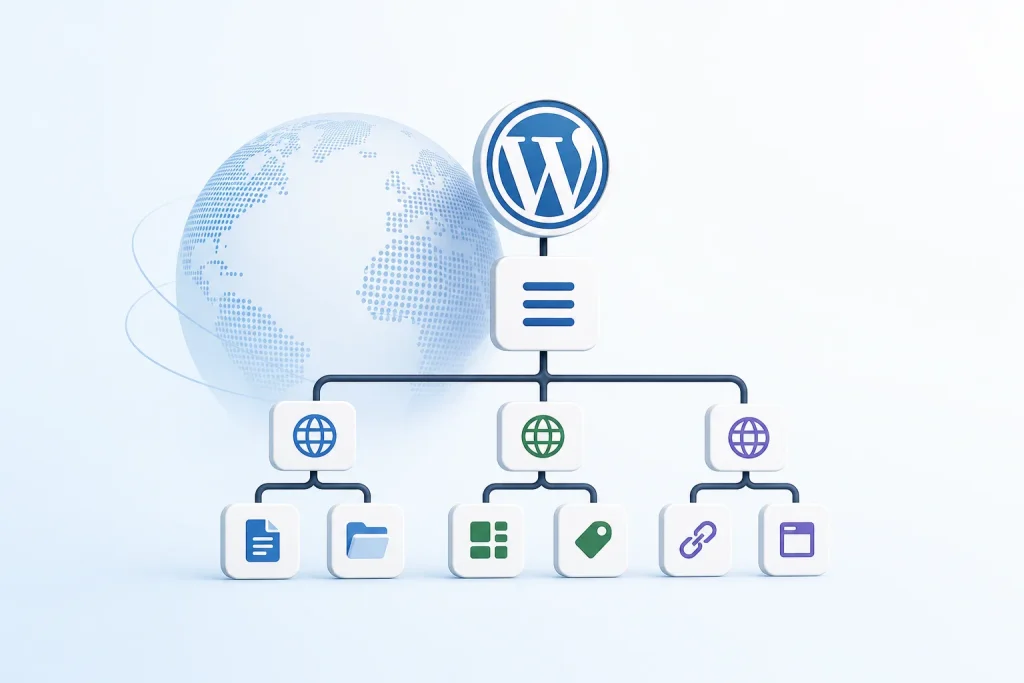
A practical way to think about it is that each layer answers a different question. The slug answers what the user sees, the redirect answers where old paths go, the canonical answers what should be indexed, the internal link answers what the site points to, and the language map answers which pages are equivalents. Drift begins when those answers stop matching.
Operational consequences for WordPress owners and implementers
For site owners, drift creates maintenance overhead because every translation change can require updates in multiple places, not just in the post editor. For developers and implementers, it means permalink translation, redirect handling, canonical generation, and language relationships cannot be treated as separate concerns.
The engineering trade-off is straightforward: the more independently each layer can be edited, the more flexibility the site has, but the higher the risk that one layer will become stale. A stable multilingual setup needs a clear source of truth for translated content identity and a predictable way to propagate changes into URLs, redirects, and canonical signals.
Frequently asked questions
Why can a multilingual page have more than one working URL?
Because the visible permalink, redirect target, and canonical URL can all remain active at the same time. If they are not synchronized, the same translated content may be reachable through multiple addresses.
Why does a language switcher sometimes send users to the wrong page?
The switcher depends on a correct language map between equivalent content items. If that relationship is missing or stale, it may fall back to the wrong translated post or a default page.
Why are canonical URLs so sensitive in multilingual WordPress sites?
Because canonical targets need to match the intended language version. If the canonical points to a different language or an outdated slug, search engines receive conflicting signals about which URL should be indexed.
Can redirects solve multilingual URL drift on their own?
No. Redirects can preserve access after a URL change, but they do not fix stale internal links, incorrect canonicals, or broken language relationships. They are only one layer of the system.
SOURCES & EVIDENCE
Google: Localized versions · Google: Canonicalization · WordPress Rewrite API
PUT THE ARCHITECTURE TO WORK
See how WordPress integrations behave in a multilingual system
Explore plugin-specific compatibility, translation surfaces and implementation notes in the REEID Integration Directory.

AIOSEO
REEID has tested and verified AIOSEO compatibility with REEID Translate. No specific visitor-facing translation field is currently published for this integration.
Rank Math
REEID has tested and verified Rank Math compatibility with REEID Translate. No specific visitor-facing translation field is currently published for this integration.
Yoast SEO
REEID has tested and verified Yoast SEO compatibility with REEID Translate. No specific visitor-facing translation field is currently published for this integration.